Understanding sleep cycle science is the key to waking up refreshed, improving mental clarity, and maintaining long-term health. Every night, your brain and body move through structured sleep stages known as sleep cycles, each playing a vital role in physical recovery, memory consolidation, and hormonal balance.
Most people focus only on how many hours they sleep, but when you wake up during a sleep cycle is just as important as sleep duration.
Why Timing Matters More Than Hours
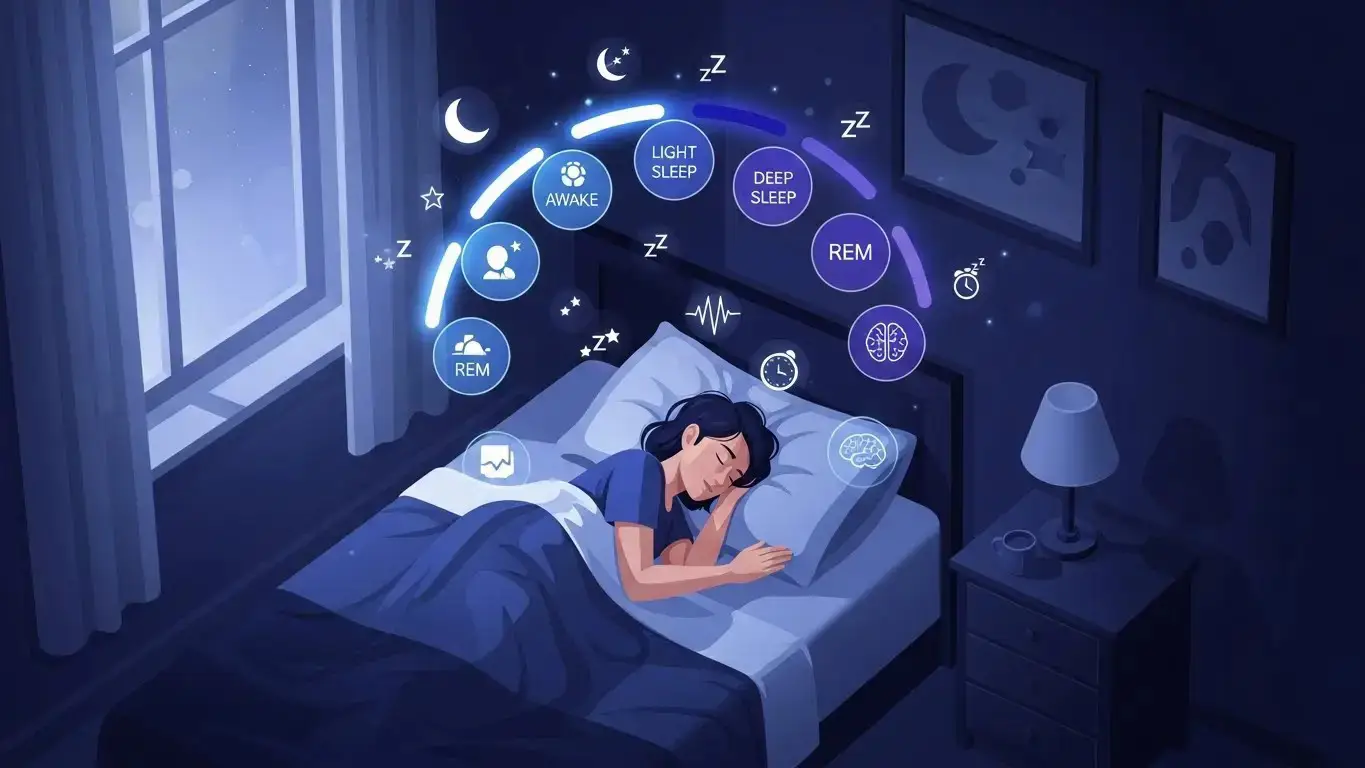
Sleep works in 90-minute cycles, not random hours. Each cycle includes light sleep, deep sleep, and REM sleep. Waking up at the wrong stage, especially during deep sleep, causes fatigue and brain fog—even after 8 hours.
- Wake Up Refreshed: Align wake-ups with light sleep.
- Improve Focus: Support memory consolidation in REM.
- Reduce Grogginess: Avoid mid-cycles wake-ups.
👉 Use a sleep cycle calculator to find your best bedtime.
What Is a Sleep Cycle?
A sleep cycle is a recurring pattern of brain activity that occurs during sleep. Each cycle lasts approximately 90 minutes and repeats 4 to 6 times per night, depending on total sleep duration.
Each cycle consists of two main categories:
- Non-REM (NREM) sleep
- REM (Rapid Eye Movement) sleep
Your body must pass through all stages in the correct order to achieve truly restorative sleep.
The 4 Stages of Sleep Explained
Stage 1: Light Sleep (NREM Stage 1)
Duration: 5–10 minutes
Function: Transition from wakefulness
to sleep
This is the lightest sleep stage where muscle activity slows, eye movement decreases, and brain waves begin to change. You can wake up easily during this stage and may feel like you weren’t asleep at all.
SEO Keywords: light sleep stage, stage 1 sleep, falling asleep phase

Stage 2: Deeper Light Sleep (NREM Stage 2)
Duration: 20–25 minutes per cycle
Function: Body temperature
regulation and memory processing
During this stage, your heart rate slows and body temperature drops. The brain produces "sleep spindles" and "K-complexes" that help protect the brain from waking up. This stage makes up about 50% of total sleep.
SEO Keywords: stage 2 sleep, sleep spindles, memory consolidation
Stage 3: Deep Sleep (NREM Stage 3)
Duration: 20–40 minutes (mostly early in the
night)
Function: Physical restoration and immune support
Also called slow-wave sleep, this is the most restorative stage. Benefits include muscle repair, tissue growth, and immune system strengthening. Waking up during deep sleep causes sleep inertia, making you feel groggy and disoriented.
SEO Keywords: deep sleep, slow wave sleep, restorative sleep
Stage 4: REM Sleep
Duration: 10–60 minutes (longer later in the
night)
Function: Brain recovery, emotional regulation, creativity
REM sleep is when dreaming occurs and brain activity resembles wakefulness. It is essential for mental health, emotional stability, and problem-solving skills.
SEO Keywords: REM sleep, dreaming stage, brain recovery

Sleep Cycle Progression
Cycles repeat every 90 minutes, but their structure changes as the night progresses.
Early Night: Focus on Deep Sleep
Late Night: Focus on REM
Why Waking Up at the Right Time Matters
Waking up mid-cycle, especially during deep sleep, leads to fatigue, brain fog, and reduced productivity. Waking at the end of a cycle helps you feel refreshed and is the best time to wake up for morning alertness.
How Sleep Cycle Calculators Work
Sleep cycle calculators estimate optimal bedtimes or wake-up times by counting 90-minute sleep cycles and accounting for the average 15 minutes it takes to fall asleep.
Optimize Your Sleep
Calculators help you choose better bedtimes and wake naturally without exhaustion. This is the scientific foundation behind our tool.
Try the Sleep CalculatorFactors That Affect Sleep Cycle Quality
1. Circadian Rhythm
Your internal clock regulates sleep timing using light exposure.
2. Blue Light
Screens suppress melatonin, delaying sleep onset and disrupting cycles.
3. Caffeine
Stimulants reduce deep sleep and fragment your cycles.

How to Improve Sleep Cycle Efficiency
Simple Steps for Better Cycles
- Maintain consistent sleep and wake times.
- Avoid screens 60 minutes before bed.
- Sleep in a cool, dark room.
- Limit caffeine after mid-day.
Sleep Cycles vs Total Sleep Duration
Quality often outweighs quantity. Sleeping 8 hours at the wrong times can feel worse than 7 hours aligned with cycles. Completion of full cycles determines your daily energy and cognitive performance. Find your best time to sleep and align with your biology.
Sleep Cycle FAQ
A sleep cycle is a structured sequence of sleep stages that your brain and body move through during sleep. Each cycle lasts about 90 minutes and includes light sleep, deep sleep, and REM sleep.
Most adults need 4 to 6 full sleep cycles per night, which equals 6–9 hours of sleep, depending on individual needs.
Feeling tired after 8 hours often means you woke up during deep sleep, not at the end of a sleep cycle. Timing matters just as much as sleep duration.
The best time to wake up is at the end of a sleep cycle, during light sleep or REM sleep. This reduces grogginess and improves alertness.